Snorkelling, Diving and Dolphins in Mauritius: Prices, Rules
First dive Rs 4,800 and Open Water Rs 30,000 at a Trou aux Biches centre (2026 tariff), plus the legal rules for dolphin boats: distance, hours, swimmers.
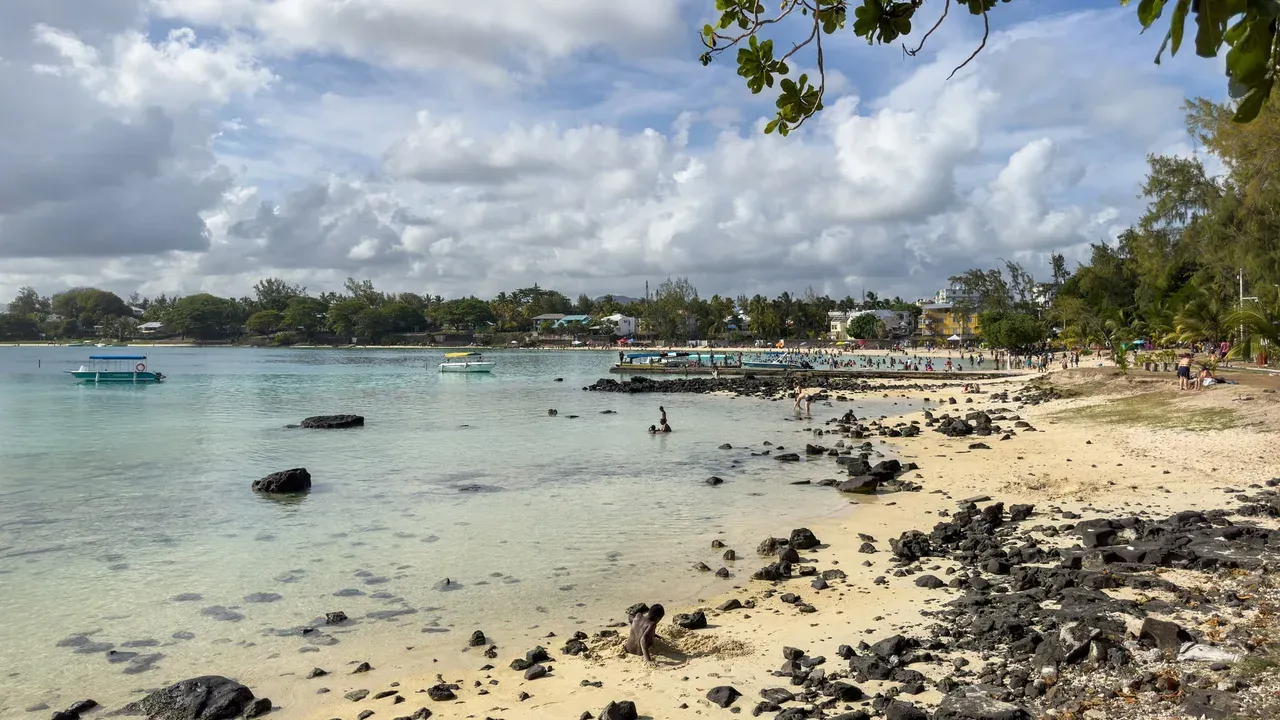
A first scuba dive costs Rs 4,800 at one dive centre in Trou aux Biches and from €65 at another in Belle Mare, according to their own price lists (read on 16 November 2026), and an Open Water course costs Rs 30,000 at the first and from €630 at the second. Snorkelling is cheaper still, and dolphins are the part of the trip where the rules matter most: Mauritius has written regulations for dolphin boats, and reports say they’re poorly enforced.
Snorkelling: the lagoon first, a boat second
For a first-time snorkeller, a lagoon beach and a hired mask are enough to start with, before you pay for a boat. Both seasons work for a swim: the Meteorological Services gives November to April as warm and humid and June to September as cooler and dry, and summer is when to watch for warnings.
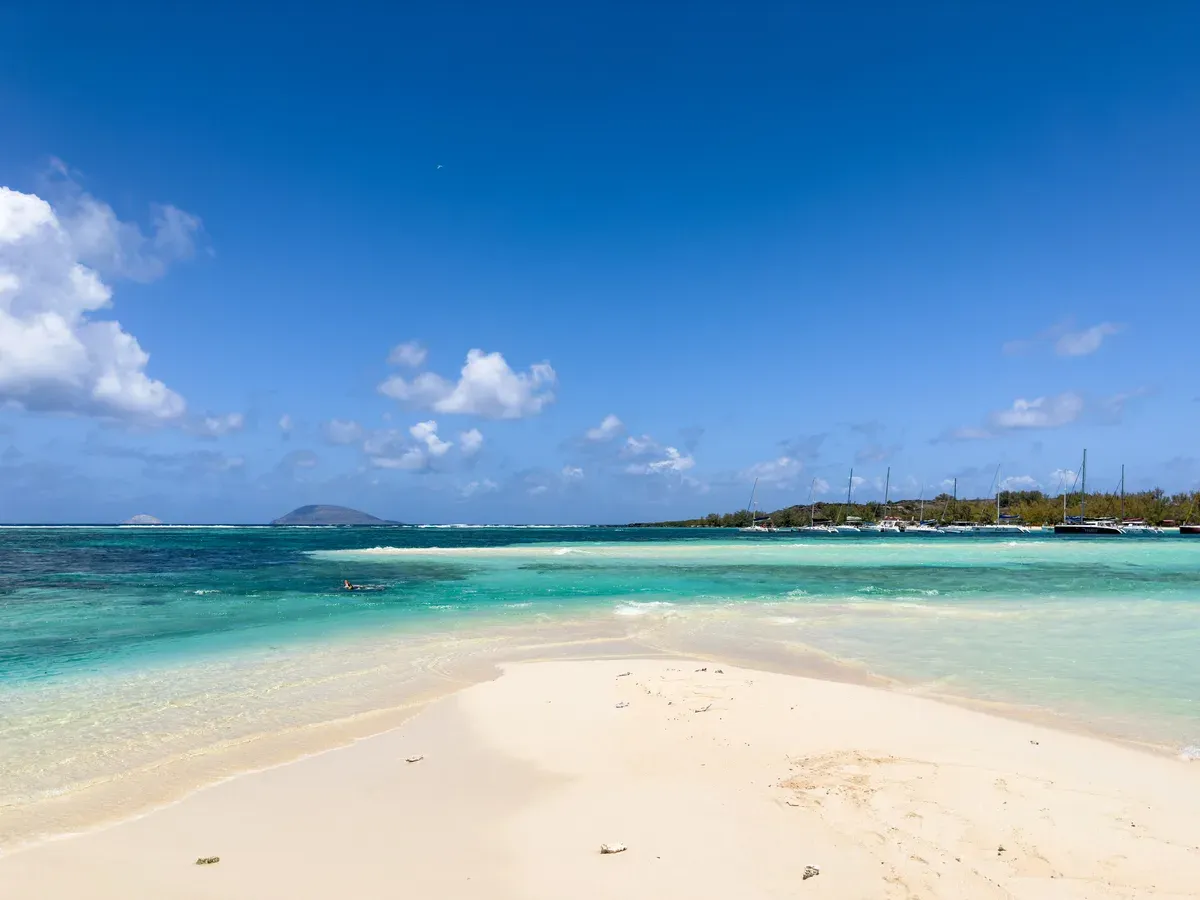
You’ll need a boat to get past the lagoon to the better reef. Three places come up most often:
- Blue Bay, south-east. A marine park with its own part in the Marine Protected Areas Regulations 2001, listed in the World Database on Protected Areas as a Ramsar wetland of international importance. Marine parks are zoned: the Marine Protected Areas Regulations mark zones with coloured buoys or floats, and the Gazette amendment of 2007 lists permits for boats and commercial activity inside them. Stay on the side of the buoys your skipper points to.
- Le Morne, south-west. The dive operator ScubaCaribe describes Le Morne as home to some of the best snorkelling on the island.
- The northern islets. Day boats from Grand Baie and Cap Malheureux often combine Île Plate (Flat Island) and Coin de Mire (Gunner’s Quoin) with a snorkelling stop at Îlot Gabriel; the Grand Baie guide sets out what those trips include, and the north coast guide covers the Cap Malheureux end of that coast. For qualified divers, Bigorno runs a safari to Coin de Mire, Île Plate, Round Island and Île aux Serpents (Snake Island), and the sea state decides whether a trip runs.
If you only want a swim and a beach, the lagoon off Île aux Cerfs is calm and shallow, though reef isn’t its strength. For the west-coast lagoon and the villages around it, see the west coast guide, and for the north, Grand Baie.
Dive centres also sell snorkelling: the Trou aux Biches centre lists a snorkelling trip at Rs 1,200 per person on its 2026 tariff (prices include 15% VAT; card payments carry a 3% fee).
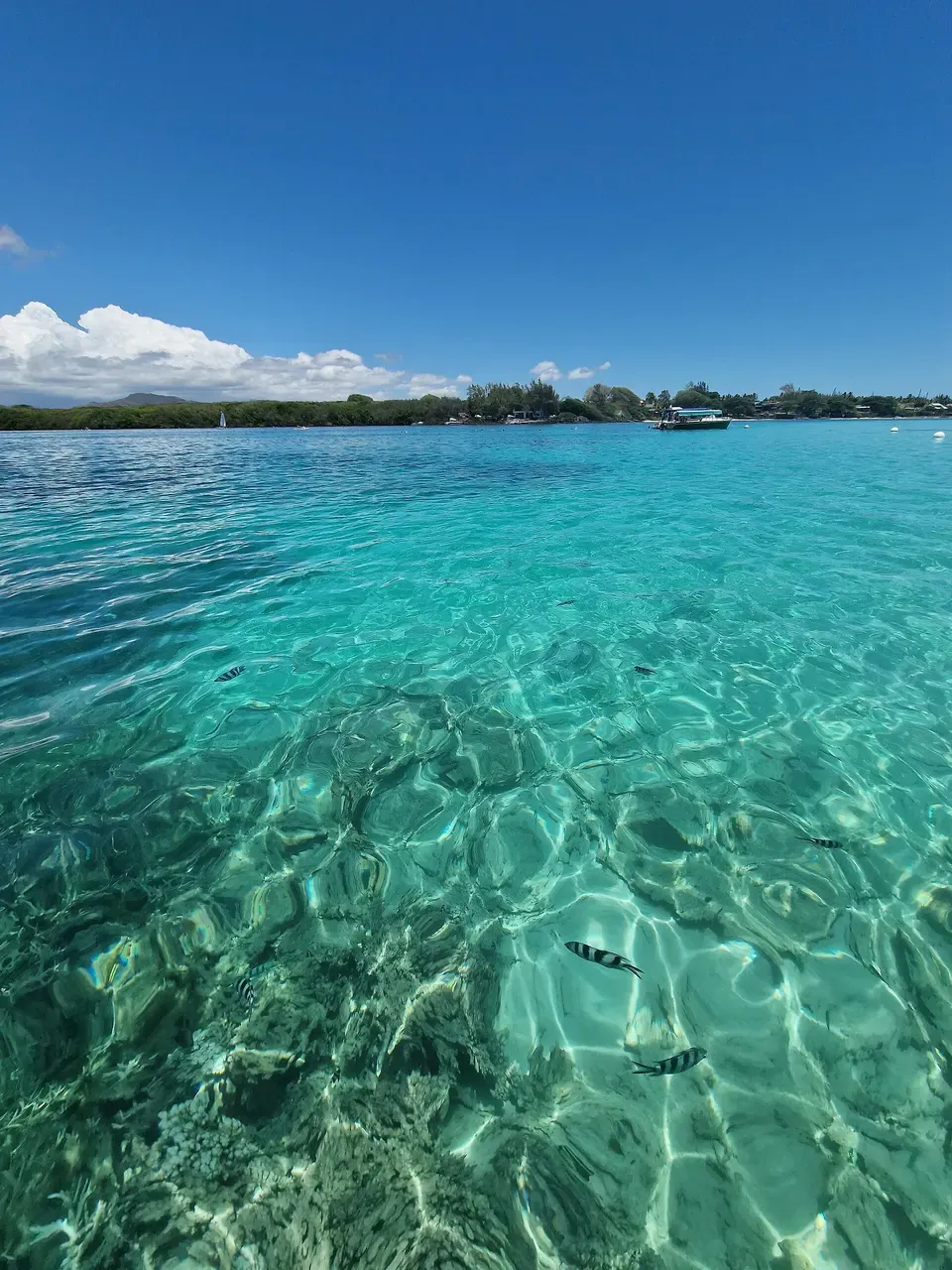
Diving: what two centres charge
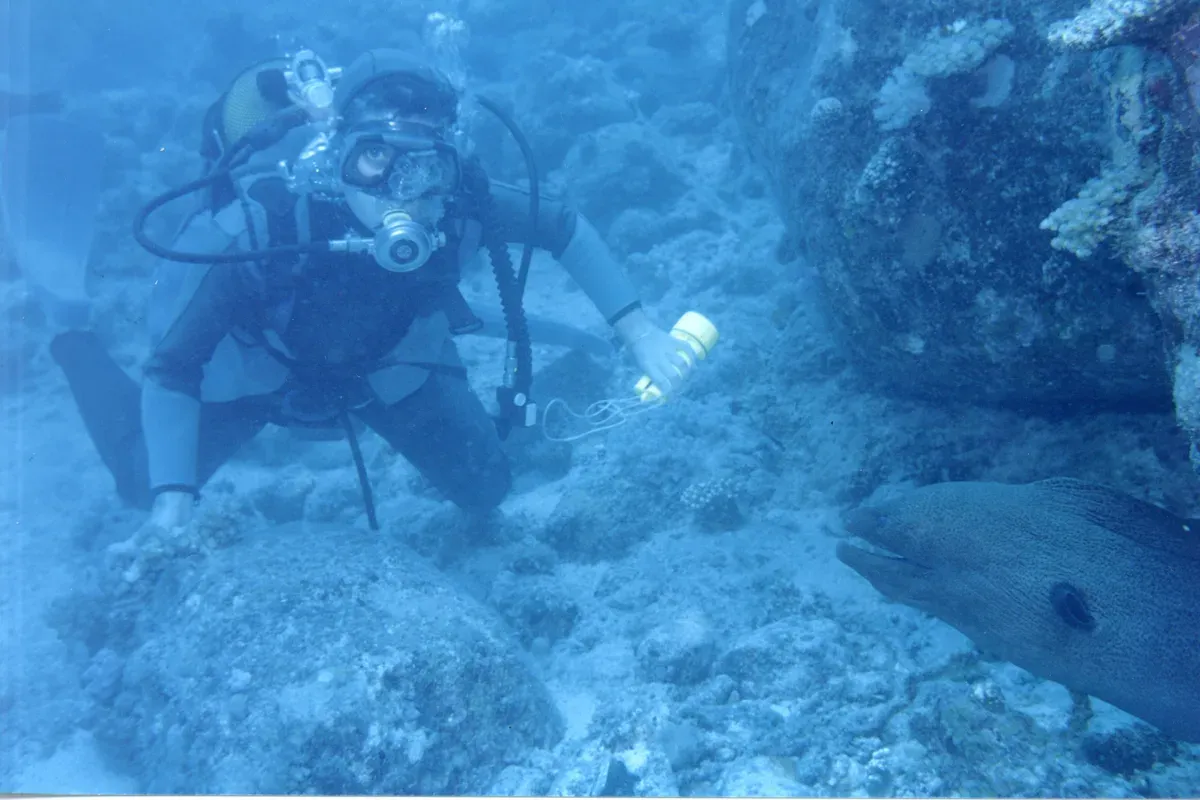
Diving is run by PADI and SSI centres on every coast. We read the price lists of two of them on 16 November 2026. They’re in different currencies, so convert both at the day’s rate before comparing, and note that the conditions differ.
| What you buy | Bigorno, Trou aux Biches (north-west) | Dive Passion, Belle Mare (east) |
|---|---|---|
| First dive (lagoon session, then a dive) | Rs 4,800 | from €65 |
| First dive plus an open-sea dive | Rs 4,800 plus Rs 4,200 for the second | from €133 |
| One dive, certified diver | Rs 3,000 with gear | from €65 for an exploration dive |
| Open Water Diver course | Rs 30,000 | from €630 |
| Advanced Open Water course | Rs 26,700 | from €535 |
Bigorno states that its prices are per person with scuba gear, include 15% VAT and carry a 3% fee on card payments, that its tariff is for 2026, and that its PADI courses start from age 10. Dive Passion’s prices are shown as “from” prices; its page doesn’t say what’s included beyond Scubapro gear for its six-dive pack and eLearning for its courses, so ask before you pay.
What a first-timer gets
A first dive, in both centres’ wording, starts in shallow water. Bigorno describes it as pool or lagoon exercises that let someone who has never tried scuba dive between 5 m and 12 m with an instructor. Dive Passion describes a first experience in the Belle Mare lagoon with a certified PADI instructor. Neither asks for a certificate, because both are for people who haven’t dived. We’d book it for the second or third day of the trip, once the jet lag has gone.
What certified divers need
Bring your card, and your logbook if you have one. Bigorno’s northern islets safari is for qualified divers, listed as Advanced Open Water. If you haven’t dived for a year, the same centre lists a refresher (lagoon session plus a dive) at Rs 4,600. Nitrox up to 40% is offered by the Trou aux Biches centre at Rs 250 per tank on top. Dive Passion says it has 15 sites within a 10-minute boat ride of Belle Mare; Bigorno says it has around 30 within about 10 minutes of its base.
A course costs more than try-dives on one trip, and what you buy is the certificate: at Bigorno the Open Water course is Rs 30,000 for four open-water dives and a card you keep, against Rs 4,800 for a first dive and Rs 4,200 for a second, while a certified diver pays Rs 3,000 for a single dive on the same tariff. Both centres include eLearning, so ask whether the theory can be done before you fly.
Flying home
Diving and long-haul flights don’t mix straight away. The Divers Alert Network’s guidance, agreed at its 2002 workshop, is to wait at least 12 hours after a single no-decompression dive and at least 18 hours after multiple dives per day or several days of diving. Plan the last dive for the day before your flight, not the morning of it. Check that your travel insurance covers scuba and to what depth; policies differ, so read the schedule rather than the headline.
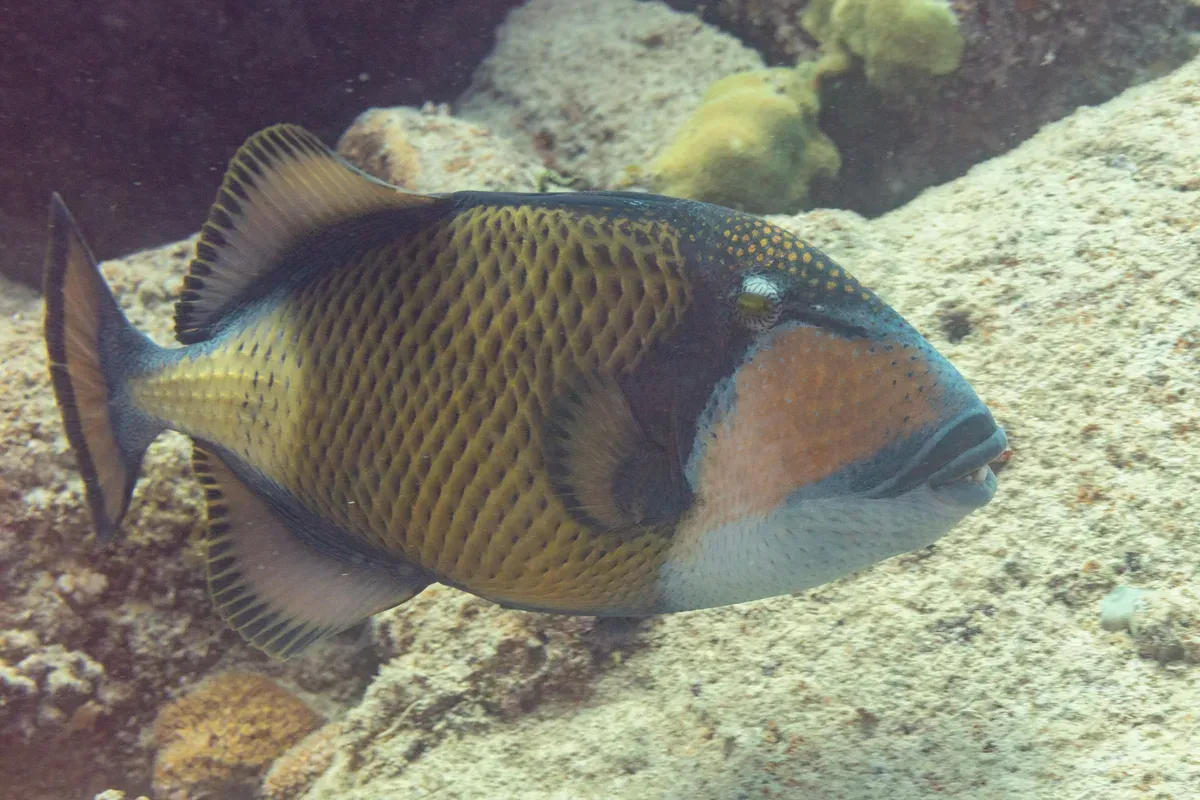
Dolphins: what the law says
Mauritius regulates this activity. The Tourism Authority (Dolphin and Whale Watching) Regulations 2012 (Government Notice 154 of 2012) set rules for any pleasure craft near a dolphin, whoever’s paying. The ones that affect your trip:
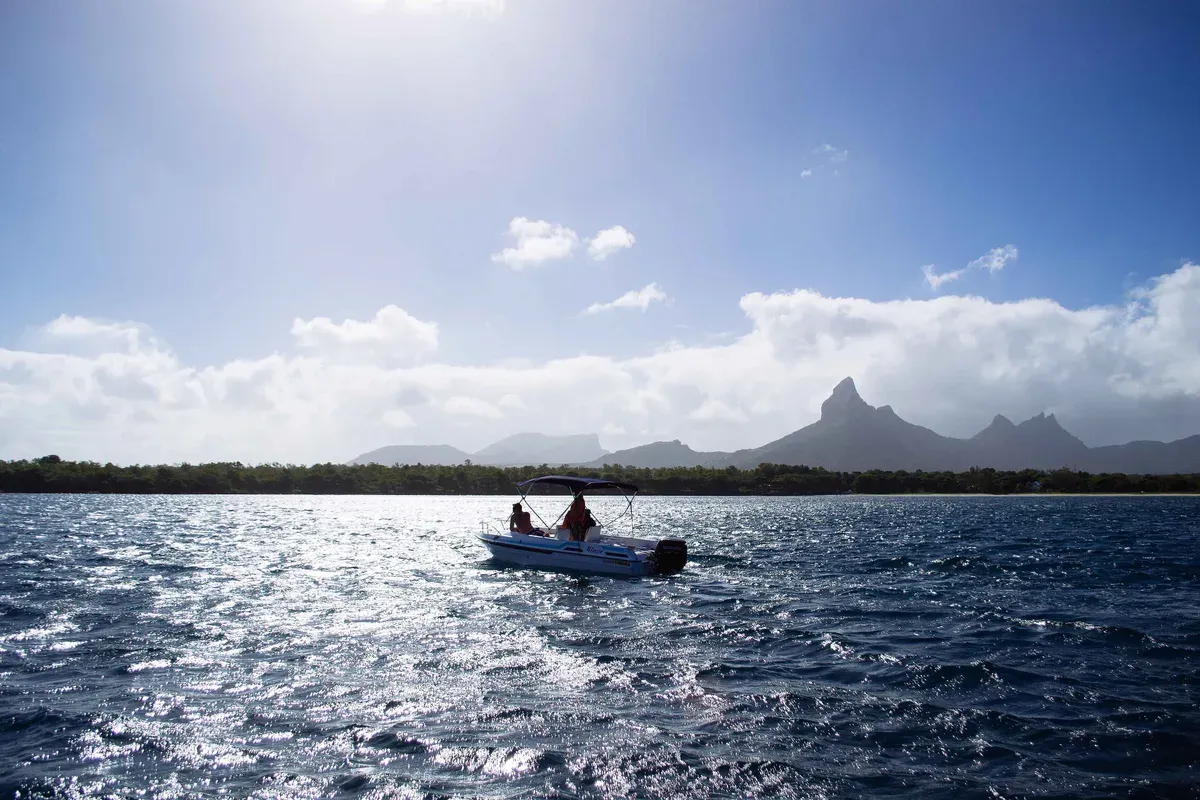
- Distance. Boats must not enter the 50-metre zone around the closest dolphin. Between 50 and 150 metres is a regulated zone, where the boat travels at no-wake speed.
- Approach. From the side, on a parallel course. Not from behind or head-on, not through a pod, and not circling it. No sudden changes of speed or direction in the regulated zone.
- Contact. No feeding, no throwing objects, no touching, no noise to attract the animals.
- Hours. Paid dolphin watching is allowed from 06:00 to noon, and paid watching with swimming from 06:00 to 09:00, unless the Authority permits otherwise in writing.
- Swimming. Allowed only from a licensed boat with a life-saver aboard, a first-aid kit and an oxygen kit, the Alpha flag flying, a signed disclaimer and a briefing. No more than three swimmers, life-saver included, may be in the water at once.
- Whales. Swimming, diving or snorkelling with a whale is prohibited.
- Paying trips. The boat must carry a Tourism Authority label, have a skipper with a certificate and a propeller guard.
The regulations also keep kite surfing, jet skiing, paragliding, diving and windsurfing out of 500 metres around the closest dolphin or whale. You can read the full text on the FAOLEX register.
Why you can’t assume it’s followed
In November 2025 L’Express reported that the Tourism Minister told parliament the 2012 regulations hadn’t been put into effect: the 278 boats operating on the west coast held a simple excursion licence rather than the specific licence the regulations require. Reasons cited went back to 2012, including insurers refusing to cover swimming with dolphins. In October 2026 the same paper reported that Cabinet had noted an Enforcement Squad led by the Tourism Authority, awareness sessions for skippers, and planned amendments for stricter requirements. We haven’t seen the amended text.
For you this means the rules are a checklist to hold a skipper to, not proof that the boat in front of you is licensed.
Questions to ask before you pay
- Is this watching only, or watching with swimming? Pick watching only if you aren’t sure.
- Does the boat carry the Tourism Authority label, and is there a life-saver aboard in a visible vest?
- What time do we leave? A trip that sets off after noon is outside the paid-watching window; swimming after 09:00 is outside its own.
- How many boats will be with the pod? If a skipper circles or chases dolphins, say so and ask to move off.
- What’s the full price per person, and what does it include? Fares vary by operator, so get the figure in writing before you board.
- For diving: what’s included (gear, VAT, card fee), when is the briefing, and what’s the cancellation rule if the sea is rough?
- Does your own policy cover scuba? The travel insurance guide shows where scuba sits in SafetyWing Essential’s cover.
The seven-day itinerary keeps day 2 in the north for the water and days 5 and 6 on the west coast free, which is where a first dive or a dolphin morning fits. Blue Bay, near the airport, and Île aux Cerfs, on the east coast, are off that route: give them a day of their own, or the last day if your flight leaves in the evening.
Tickets and opening hours
- Ticket price
- First dive Rs 4,800 (Trou aux Biches) or from €65 (Belle Mare); Open Water course Rs 30,000 or from €630
Prices are two dive centres' own price lists read on 16 November 2026, with the conditions stated in the text. Dolphin trip fares vary by operator and are not quoted here.
Details checked: 16 November 2026
Read also

Things to do · 8 min read
Best Beaches in Mauritius: Which Coast for Which Beach Day
Verified · 17 November 2026Eight beaches compared by official sea frontage and airport taxi fare, and which coast to pick when the June to September trade winds blow.

Before you go · 8 min read
Before You Go to Mauritius: Entry, Cyclones, Rupees
Verified · 17 November 2026UK, Canadian and EU visitors need no visa. Passport, travel form, cyclone season to 15 May, rupee rates and customs limit, checked 17 Nov 2026.

What to see · 7 min read
Black River Gorges: Which Walk, and Where It Ends
Verified · 17 November 2026Black River Gorges walks: the 14 km Machabée loop back to Pétrin, the strenuous 10 km trail to Lower Gorges and the easy 6 km Savanne return.

Car hire · 7 min read
Car Hire in Mauritius: Licence, Excess, Driving on the Left
Verified · 17 November 2026Car hire in Mauritius: daily prices from €24, excess of €400 to €1,000, licence rules for UK and Canadian drivers, and what driving on the left involves.