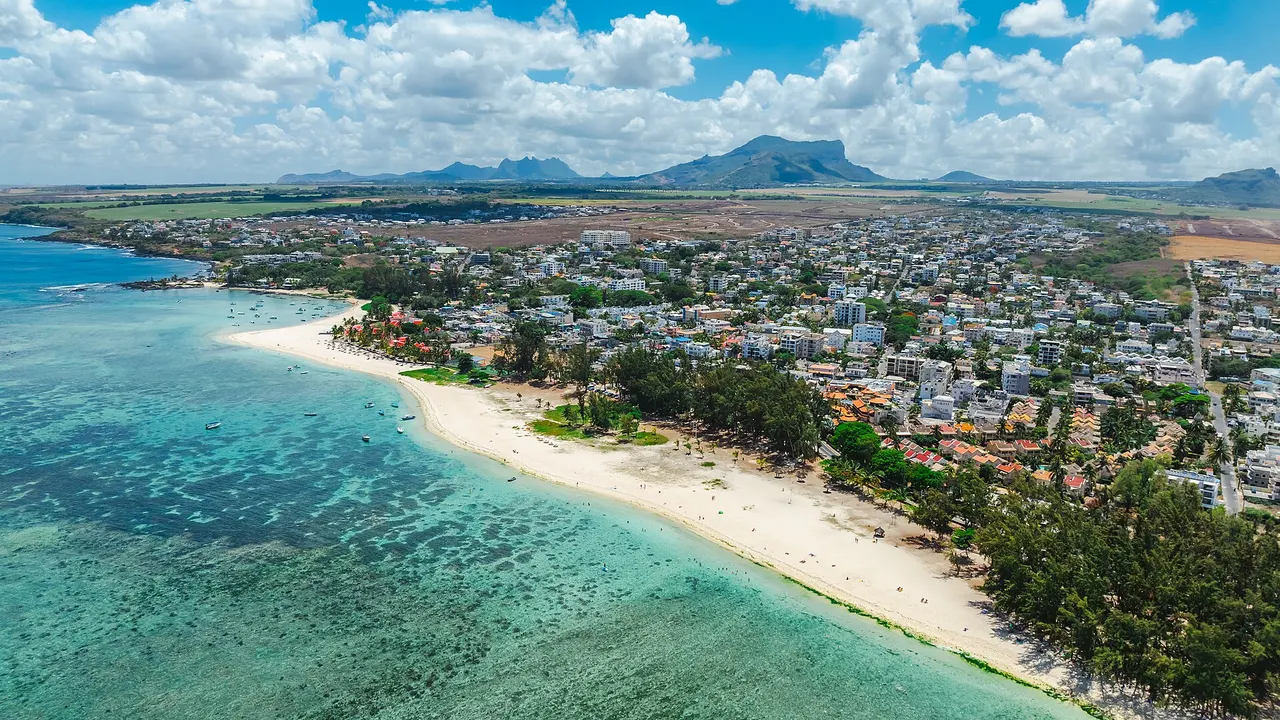
Flic en Flac is the pick for a long beach with shops and restaurants close by, Tamarin for surf, salt pans and a quieter village, and Le Morne when the mountain and the kitesurfing are the reason you came. All three sit on the sheltered side of the island, and a taxi from the airport costs within Rs 500 of the same for each. So the choice comes down to what you want to walk to in the evening, not to how far you’ll travel.
Why the west, and the transfer to get there
The west is the leeward coast, sheltered from the south-east trade winds. The Mauritius.com weather page calls it popular for sunsets and “leeward-coast comfort”, and says the east is more exposed to the trades, especially in winter. In practice that means calmer lagoon mornings and sunsets over open water.
It’s 47 km by road from the airport to Flic en Flac, across the island but not to its far end: Grand Baie, in the north, is 73 km. The official airport taxi list puts the west at 1 hour to 1 hour 15 minutes, so plan your first evening around that, not the 43 minutes a route planner shows for an empty road (OSRM, 16 November 2026), and count on the longer figure at rush hour.
Flic en Flac, Tamarin or Le Morne
| Base | Suits | Official taxi fare from the airport, one way* | Character |
|---|---|---|---|
| Flic en Flac / Wolmar | First visit, families, no car | Rs 3,000 | Long public beach, village with shops and eateries |
| Tamarin / Grande Rivière Noire | Surfers, walkers, people with a car | Rs 3,200 | Spread out; salt pans, bay, mountains behind |
| Le Morne / La Gaulette / Chamarel | Kitesurfers, hikers, resort stays | Rs 3,500 | Far end of the coast; the mountain, the lagoon and the wind |
*Official airport taxi fare list, effective from January 2026 (Airport Taxi Owners Association, on the airport operator’s site; read on 16 November 2026). Normal luggage is included, but oversized items may cost extra; a 10-20% extra charge may apply between 23:00 and 05:00, and rates may be adjusted on public holidays, at rush hours or for extra stops; paying by card adds 10%, so carry rupees.
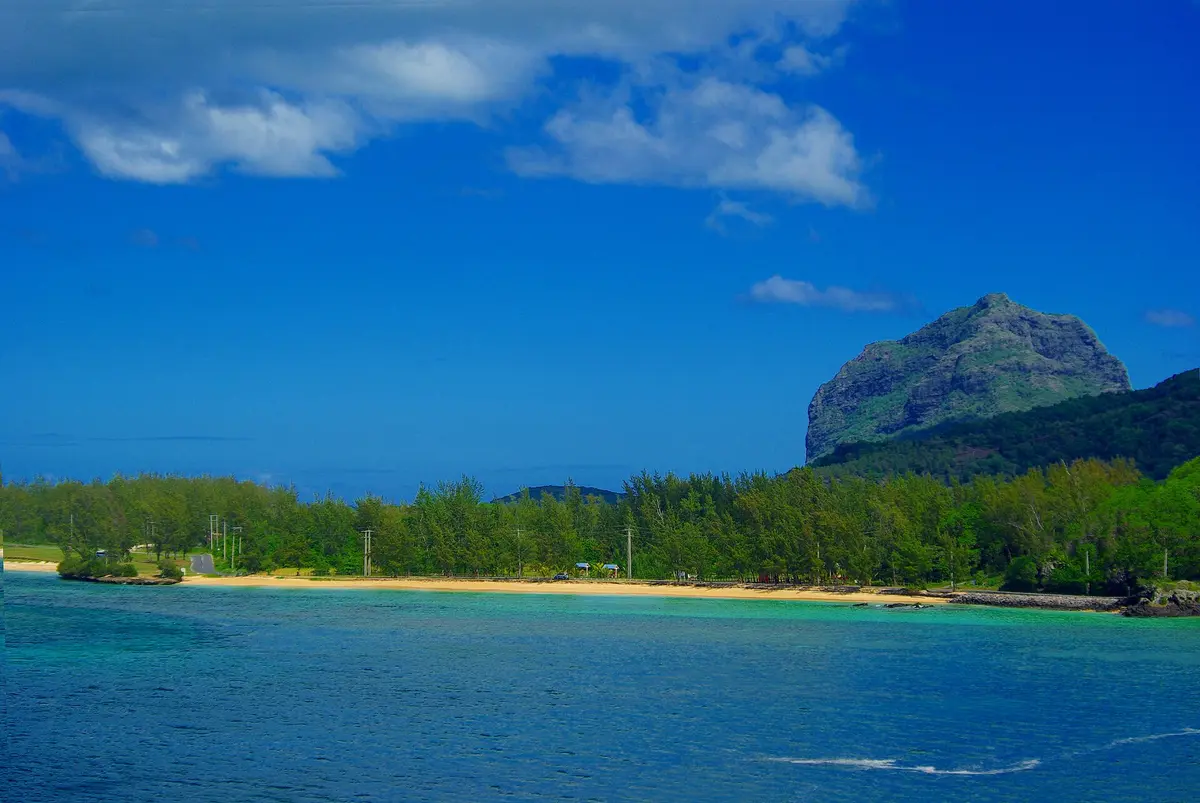
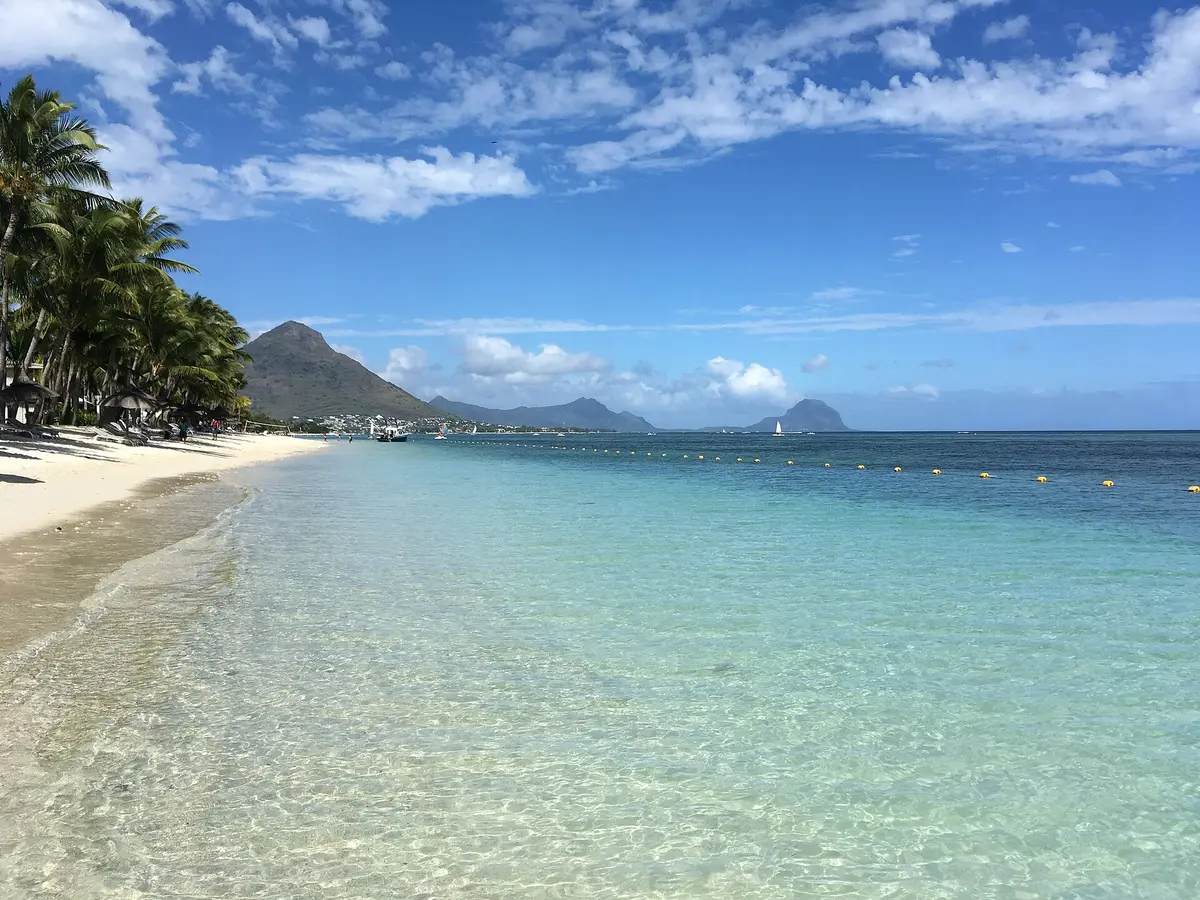
Flic en Flac suits a stay without a car, because the beach and the village sit side by side. Mauritius.com describes a long beach, with shallow water close to shore that suits snorkelling. Tamarin rewards a car, or at least a taxi habit, since its sights are scattered along the bay and up the valley behind it. Le Morne is the specialist’s choice: far from the airport, far from the shops, and exactly where you want to be if you’re there for the wind.
Getting here from the airport
Taxis wait at a counter on Level 0, in the Tour Operators Hall across from where you come out of customs, and charge from the list above; the list says a receipt is available on request, so ask for one. After a long flight this is the simple option, and for two or more people it’s usually the one that makes sense.
The budget way is the bus, and to the west it takes two. Bus 198 works the Mahébourg to Port Louis line, about 85 minutes end to end by the airport’s page, and every 15 minutes it stops in the airport’s car park; at Victoria Square in the capital you change onto a west-coast bus. With luggage that’s a long day, so it only suits a light bag and no deadline; the first and last buses of all three airport lines are in the getting around guide. For a hire car, the seven-day route shows what a week of driving looks like on this side of the island, and the car hire guide covers the licence, the deposit and the excess.
Flic en Flac
The sunset is the first reason people choose it: with open sea to the west, the sun goes down over the water, not behind a headland. The second reason is practical. Mauritius.com says the beach bars and restaurants nearby give Flic en Flac a lively evening scene, which matters on the third evening, when you’ve seen the beach and want a choice of dinner. For what to order once you’re there, from pineapple with chilli on the beach to a Creole rougaille, see the Mauritian food guide.
Boat trips for swimming with dolphins leave from here too, Mauritius.com notes. Read the snorkelling and dolphins guide before booking one: how a boat behaves around the animals is the whole difference between a good trip and a bad one. UK travel advice tells visitors to check that any water-sports operator holds a valid permit from the Ministry of Tourism.
Tamarin and the salt pans
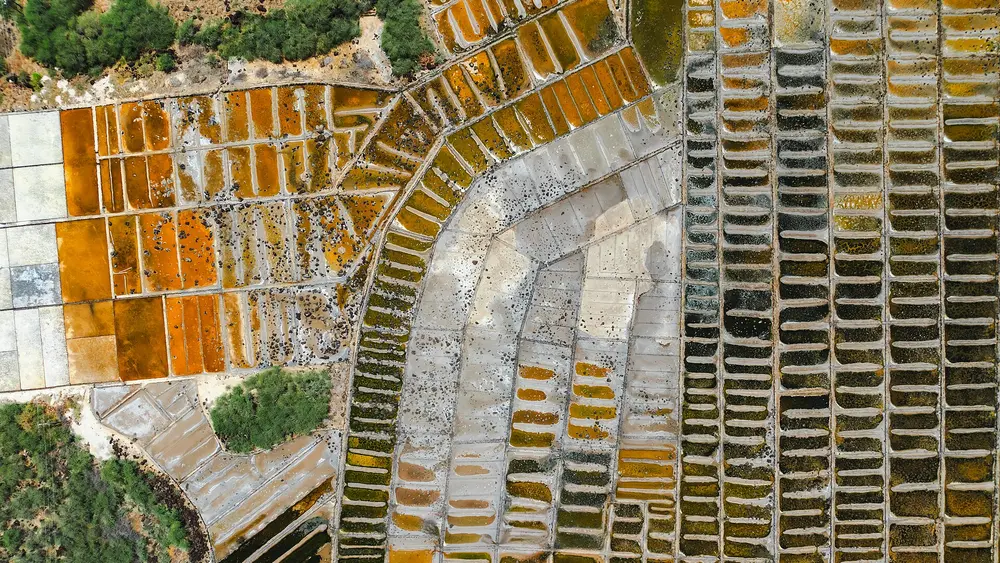
Tamarin is a different kind of base. The salt pans date back to the French colonial era and are still worked, and Tamarin Bay is known for reliable surf breaks. Mauritius.com lists dolphin trips at dawn from here, and the Seven Cascades hike as a day trip that leaves from nearby. A morning at the pans, then the bay at the end of the afternoon, makes a full day without a long drive.
Black River Gorges National Park is the backdrop. The National Parks and Conservation Service, which runs it, gives its area as 6,574 hectares. Its trailheads are a short drive inland, so a walking day starts earlier from Tamarin than from the north. The Black River Gorges guide sets out the trails and which entrance suits a west-coast base.
Le Morne and Chamarel, a stretch further
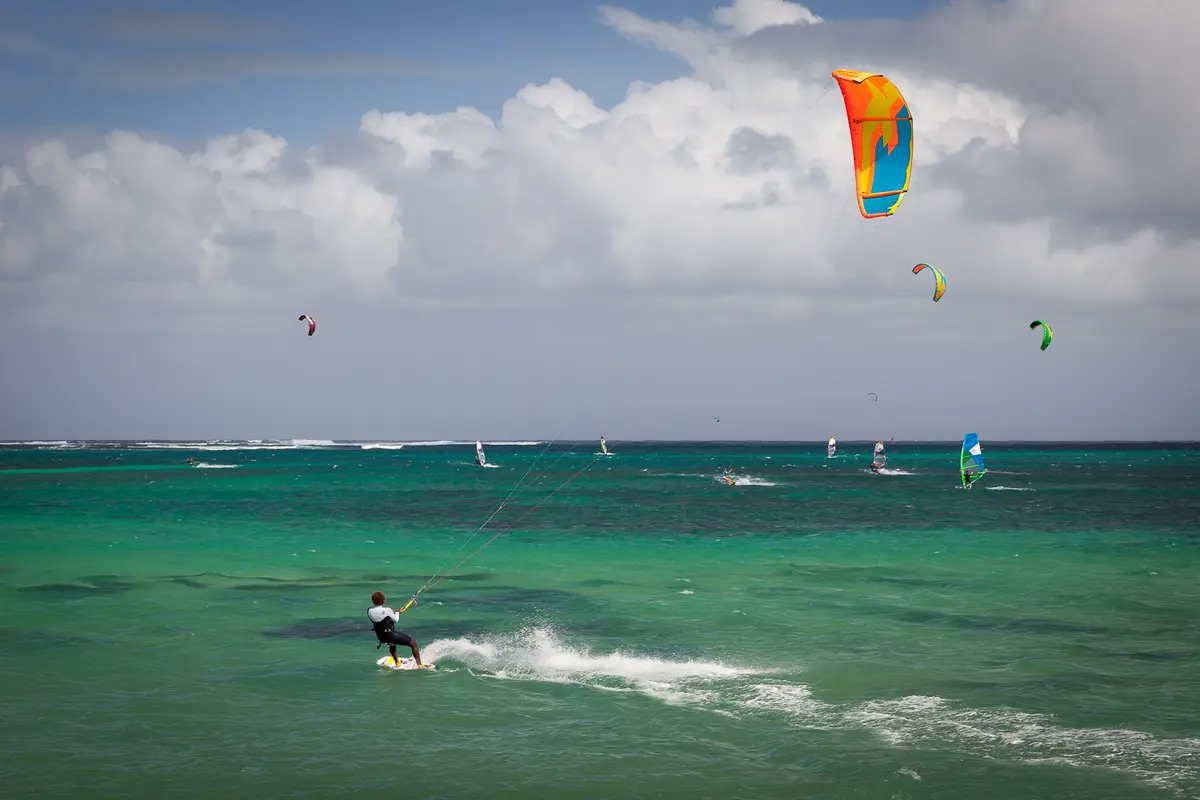
Le Morne Brabant, the mountain at the end of the peninsula, is a UNESCO World Heritage site, and Mauritius.com names the One Eye spot beside it for kitesurfing in consistent winds. The price of that is Rs 3,500 from the airport and the longest drive of the three bases. Chamarel, on the same fare line, sits in the hills above, and for most visitors it’s a day trip from Flic en Flac, not a place to sleep. Both appear in the seven-day route as one loop from the coast.
When to come, and what the weather does
Mauritius has a hot, humid summer from November to April and a cooler, drier winter from June to September, according to the Mauritius.com weather page, which adds that February and March are often the wettest months. The official cyclone season runs from 1 November to 15 May, and the site notes that named systems can fall outside it. UK travel advice gives the same broad window, “November to May”.
For the west, that gives a simple rule. In winter the east and south feel the trade winds and the west stays comparatively calm, so June to September is the time to take the west for settled beach days. In summer the coast stays warm, but choose cancellation terms you can live with from January to March, and check the official weather bulletins close to your dates; the before-you-go guide explains at which warning class you’re told to stay indoors. If you’re comparing coasts, the north around Grand Baie is the livelier base for evenings out, and the east is where the Île aux Cerfs boat trips leave from.
Is it safe?
For ordinary travellers, yes, with the usual care. UK travel advice names Flic en Flac, with Port Louis and Grand Baie, among the tourist areas where petty crime is common, and the crime it describes is mostly non-violent: bags left unattended and break-ins at tourist villas. On a long public beach that means taking turns in the water rather than all swimming at once, and leaving passports and spare cards in the room, not in the beach bag. The same advice warns against walking alone on beaches or unlit streets after dark, which on a sunset coast means leaving the beach in company, or before the light goes.
One dated note. UK advice records local demonstrations after a police shooting on 9 October 2026, and evening curfews from 12 to 18 October on most of the main island, lifted at 4:30am on 19 October; the note was still on the page on 16 November 2026. Read it again before you fly, because this is the kind of entry that changes quickly.
How long to stay
Three nights is enough to see the beach, the salt pans and one inland day. Five or six lets you add Le Morne and a dolphin or snorkelling morning without rushing. If you’re also visiting the north, put the west last in the week: the airport is closer to it and the drive home is shorter, which is how the seven-day route is laid out. Ten days leaves room for a second island: the route with Rodrigues adds the flight, and the best beaches in Mauritius compares the sand on every coast.
Getting there
- SSR International Airport (MRU) ≈47 km · 43 min without traffic; the airport taxi list allows 1 h to 1 h 15 min
- Port Louis ≈23.5 km · 29 min without traffic
- Grand Baie ≈49 km · 49 min without traffic
Read also

Regions · 7 min read
North Coast Mauritius: Grand Baie to Cap Malheureux
Updated · 17 November 2026The north coast measured: 6.6 km of road from Grand Baie to Cap Malheureux, eight public beach entries of 39 m to 727 m, and a Rs 3,500 airport taxi.

Before you go · 8 min read
Before You Go to Mauritius: Entry, Cyclones, Rupees
Verified · 17 November 2026UK, Canadian and EU visitors need no visa. Passport, travel form, cyclone season to 15 May, rupee rates and customs limit, checked 17 Nov 2026.

Things to do · 8 min read
Best Beaches in Mauritius: Which Coast for Which Beach Day
Verified · 17 November 2026Eight beaches compared by official sea frontage and airport taxi fare, and which coast to pick when the June to September trade winds blow.

What to see · 7 min read
Black River Gorges: Which Walk, and Where It Ends
Verified · 17 November 2026Black River Gorges walks: the 14 km Machabée loop back to Pétrin, the strenuous 10 km trail to Lower Gorges and the easy 6 km Savanne return.